
What New Mexico Resident Records Confirm
One-person searches work best as a set of narrow checks, each tied to a custodian. There is no single statewide deed index: county clerks hold recorded real-property instruments, and assessor systems differ by county. The state voter tool checks registration status, courts show case summaries, and vital records follow separate eligibility rules. Historical sources can add family or school context, but they do not prove who lives at an address now.
| Record | What It Confirms | Where It Is Held | Access |
|---|---|---|---|
| Assessor parcel | Owner of record, situs, mailing address, and tax or exemption clues | County assessor or treasurer | County portal or counter; fields and update timing vary |
| Voter registration | Status, registered address, party, precinct or district, and participation indicator | Secretary of State and county clerk | Self-status lookup or request for public fields after clerk acceptance; protected data stays closed |
| Court index | Case number, party role, type, filing date, status, and disposition when shown | New Mexico Courts | Public summary; older files and documents use separate routes |
| Vital records | Birth, death, marriage, or divorce facts and family links | NM Department of Health, county clerk, or district court | Birth copies are restricted; other records have their own rules |
| Recorded documents | Deed, mortgage, lien, probate or estate party names, and dates | County clerk | County search, counter, mail or email, and copy routes |
| Business filings | Entity, managers or officers, registered agent, office, and status | Secretary of State Enterprise | Some functions need an account; document access varies |
| Professional license | Licensee, number, status, board, and public discipline fields | Regulation and Licensing Department or board | Board-specific lookup |
| Unclaimed property | A past name, address, or asset clue | Taxation and Revenue | Free state search and official claim route |
| Directories, yearbooks, obituaries | Past household, address, school, relative, or death clue | Libraries, archives, newspapers, and UNM | Online, reference desk, or microfilm; coverage varies |
Choose a source by the question. An owner name belongs to the county assessor record; a case association belongs to the court index; a birth certificate request belongs with Vital Records when the applicant meets the rules. A mailing address may differ from the parcel location, and none of these entries alone proves present occupancy.
Note: New Mexico has 33 counties, and a county clerk is the recording custodian for local deeds rather than one statewide recorder.
New Mexico Court Lookup Search Fields
The public New Mexico Courts Case Search is a summary tool, and its internet information is not the official court record. Its visible field set was only partly exposed during research, so use the following as a guide to the controls documented, not as a promise that every court screen looks the same. The public page also posts a Sunday maintenance window from 3:00 to 7:00 p.m.
| Field or control | Type and use |
|---|---|
| Court location | Selector; likely required to choose a court or location before searching. |
| Case number | Optional text field when the number is known. |
| Party or name | Optional text search; exact handling of spelling variants should be checked in the live form. |
| Case category or type | Optional selector; public result categories vary by court. |
| Filing year or date | Date or selector control where exposed to narrow results. |
| Search or Select | Query or navigation control. |
The registered re:SearchNM access route has a richer documented pattern. It can use court type, location, case category, year, and case number. Attorney search calls for first and last name, with middle name optional; the registered search can also use attorney number, case status, and filing-date filters on or after and on or before a date. Sort choices include filing date, reverse filing date, or status. Do not treat those registered controls as fields confirmed on the public screen.
The New Mexico public case lookup landing screen shows where the statewide search begins and warns that results are not the official record.
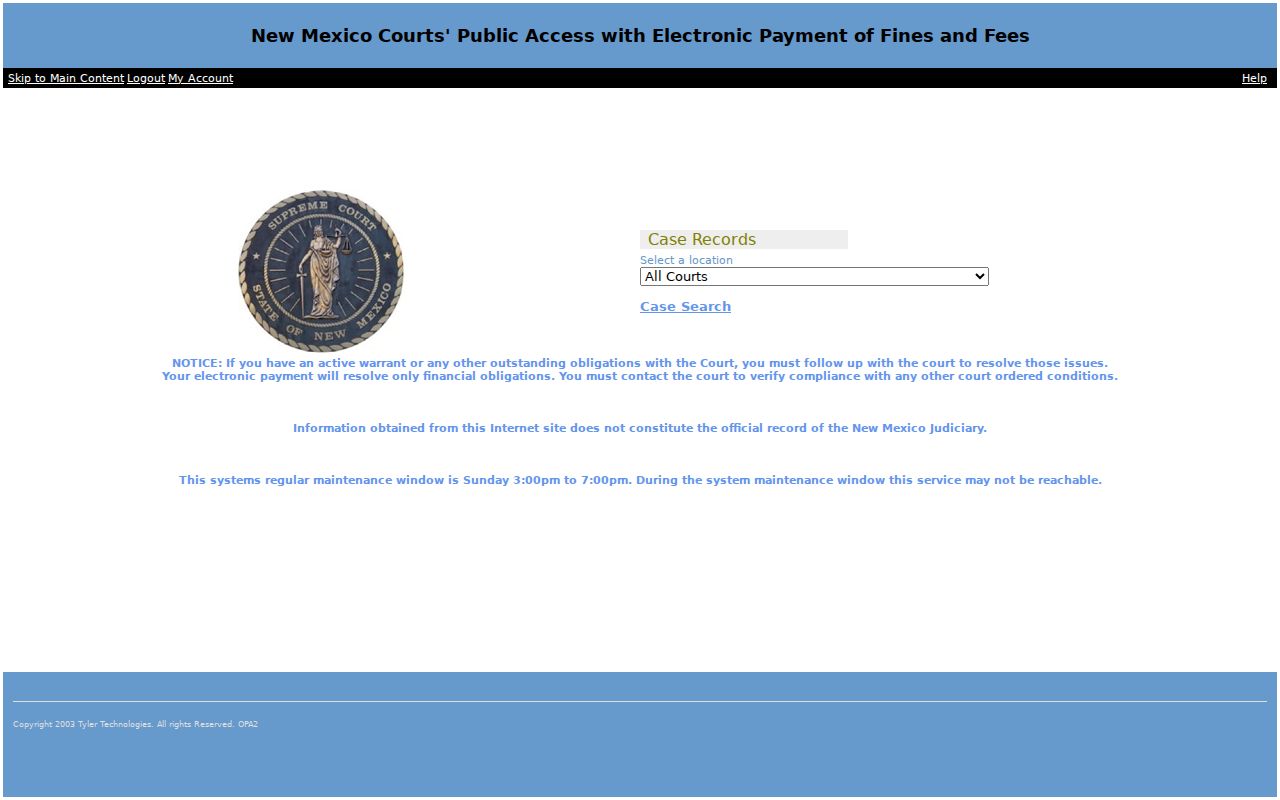
Use the online result to find a case number and court location, then ask the clerk how to inspect the official file or obtain a copy.
New Mexico Court Lookup Results, Field by Field
A name hit is a starting point. The public result may show the party as indexed, a case number and court location, the case category, filing date, later docket activity, status, and disposition when those fields are available. A party can appear as a plaintiff or petitioner, or as a defendant or respondent. Compare the role and dates before deciding that a record belongs to the person you seek.
| Result field | What to record |
|---|---|
| Party name and role | Indexed spelling and the party's case role, if the result exposes it. |
| Case number and location | The number and named court; retain both for a clerk request. |
| Category or case type | The displayed civil, criminal, domestic or family, probate, traffic, or municipal type where available. |
| Filing and docket dates | The filing date and later register-of-action entries that appear. |
| Status or disposition | Open or closed status and the stated outcome, if shown. |
| Attorney details | Name and CAID in registered attorney search; public access does not expose every registered field. |
| Documents and identifiers | Filed documents are not in basic Case Search; SSN, address, and other protected identifiers are withheld online. |
Basic Case Search gives a summary or docket view, not a full document packet. For a registered-profile result, document access depends on the user's profile and court policy. The registered sign-in screen links to help about public access, but its result view requires an account and could not be inspected as an open page.
The secure court-access screen marks the separate registered route and its public-access help link.
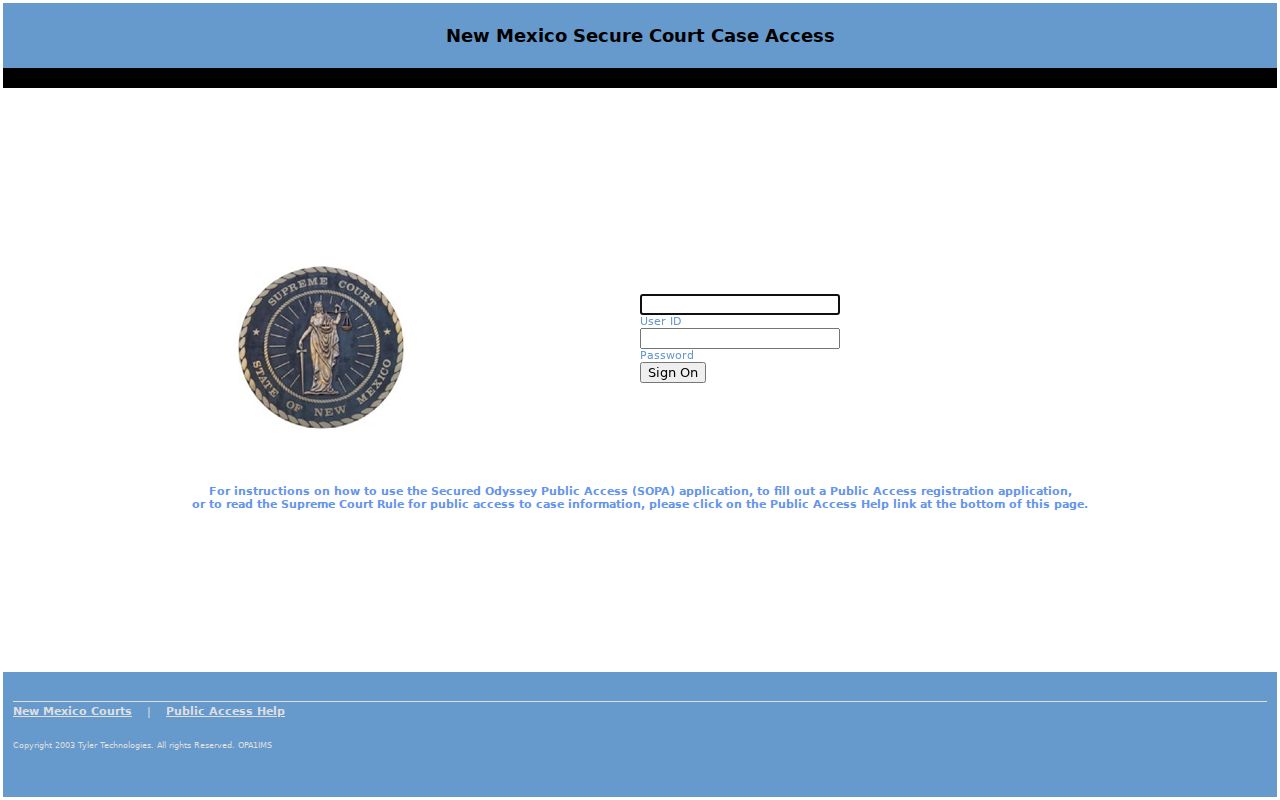
When the public summary leaves out a document, ask the court clerk about the case file, archive retrieval, copies, or certification.
Records before 1997 require an online request to the judiciary. Public access spans appellate, district, magistrate, metropolitan, and municipal cases, but the exclusions matter: municipal results are limited to historical domestic-violence and DWI convictions from September 1, 1991; juvenile criminal cases are not shown from July 1, 2007; and domestic-violence protection-order cases are not shown from July 1, 2008. Sealed, expunged, adoption, juvenile, and other protected matters may be unavailable. For a federal case in the District of New Mexico, use PACER. Court terminals and clerk counters can help with archived records, copies, and case status; IPRA applies to administrative public records, subject to court rules, rather than opening restricted case details.
Note: A docket can link a party to a case, but it does not by itself confirm a current address, identity, or the truth of an allegation.
Verifying One New Mexico Resident Across Records
For a current address question, keep the search narrow and record the date of each result. Begin with a county property record only when an ownership clue is relevant. The tax mailing address can be a business, agent, trust, or other parcel, while the situs address marks the property itself. The voter lookup is person-oriented, and a registration address is not proof of who is physically present on the day of a search.
- Write the full name, middle initial, known former surname, alternate spelling, and likely county. A compound surname may be indexed in more than one form.
- Use the county assessor or treasurer to check a known address or owner name. Keep mailing and situs addresses separate, and note the record date.
- Compare voter status by name, county, address, party or status, precinct, and date clues. Birth day or month and Social Security number are protected fields.
- Search the court index with the name and relevant court location. Save the case number, filing date, type, party role, and status for a clerk follow-up.
- Check a recorded document by party name or county index, then seek a second independent source that fits the same time and place.
The Secretary of State's My Registration Information tool is for an individual's status and voting-location details, not a public ZIP-wide resident list. Public voter information may include name, registration and mailing addresses, party, status, precinct or district, registration date, and whether a person voted in an election. Ballot choices are never public. A county clerk can explain inspection or public-file requests, including current fee, format, redactions, and any use affidavit; no statewide fee or delivery format was located in the inspected sources.
The online registration and update path is separate from status lookup. It requires matching Social Security number, driver's license or state ID, and date of birth with Motor Vehicle Division information.
The New Mexico voter registration and update instructions describe that matching step; they do not display a public voter file.
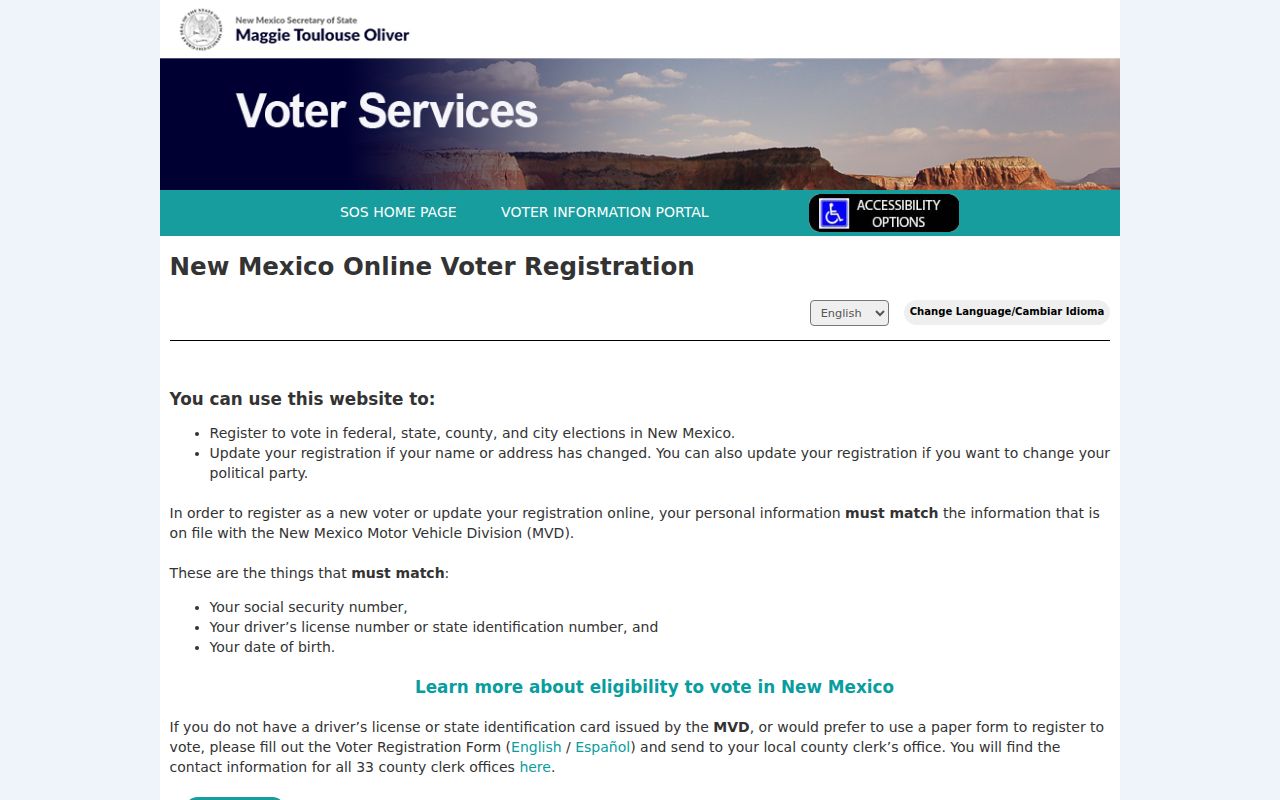
Use the update page to maintain a registration, then return to the status tool for the separate personal lookup.
- Docket
- A court's running list of case events and filings. It is not the full case file.
- Index and image
- An index is a searchable entry; an image is a view of a scanned document, if that document is available.
- Certified copy
- A copy the custodian certifies as an official copy under that record's rules.
New Mexico Birth Records and Copy Eligibility
A birth certificate is not an open name search. The New Mexico Department of Health restricts certified copies to an eligible immediate family member or a person with tangible proof of legal interest. The application asks for the applicant's name and contact details, relationship, the registrant's full name at birth, gender and full birth date, New Mexico city or county of birth, the mother's full maiden name, the father's name, quantity, payment, purpose, ID, and signature.
The listed fee is $10 for a certificate search or copy and $10 for a chargeable amendment. The form accepts check, money order, or cash and says the search fee is not returned if no record is found. Average processing is 6 to 12 weeks. Mail the application to New Mexico Vital Records and Health Statistics, PO Box 25767, Albuquerque, NM 87125, or call 1-866-534-0051 for the route described on the form. Current directions are available through the state Vital Records office.
Accepted immediate-family relationships include mother, father, sibling, child, grandchild, current spouse, and a maternal grandparent; a paternal grandparent is listed when the father is named. A non-immediate requester needs tangible proof of legal interest. Include a valid, unexpired government photo ID. The form also describes a fee waiver for a homeless individual who submits the required self-attestation. It is not a substitute for the eligibility and identity checks.
Historical announcements, census entries, church records, obituaries, and old indexes may supply a name or date clue even when the state certificate remains restricted. The research did not verify a simple age-based public opening period for birth or death certificates, so do not infer one. Death-copy eligibility and fees need a current check with the Department of Health; marriage searches go through the county where the license was issued, while divorce pleadings and decrees are district-court records.
The official New Mexico birth-record application sets out the required fields, proof, fee, and mail route.
New Mexico Family Record Search Paths
The next source depends on the family question. For an heir, search the probate case under the decedent's name and county, then review petitions, notices, inventory, and personal-representative papers for family names or address clues. Compare a probate result with a recorded deed and obituary; a name in a notice is not on its own proof of a current relationship or address.
For a former classmate, school yearbooks, alumni material, newspaper notices, school archives, and library local-history files are often more useful than current official rolls. New Mexico Historic Newspapers and local newspaper microfilm can add dates or school ties, but optical text search can miss a surname. Try spelling variants and inspect the page image or ask a reference librarian when a search returns no hit.
Birth-parent searches have a separate legal route. Adoption and confidential-intermediary rules are not ordinary public-record searches. The research did not locate the current official program name or application URL, so use an official state adoption or intermediary contact only after confirming it with the custodian. Do not treat a public court index or a relative's address as permission to bypass that process.
New Mexico names may appear as compound or unhyphenated surnames, with or without accents, under initials, or under a former surname. Compare county, time period, spouse, school, parcel, and a second independent record before connecting two people.
New Mexico Business and License Lookup Clues
A business filing or license can verify an affiliation, not where a person lives. The Secretary of State moved business filings into Enterprise by December 2024. Available entity records may show a business name or number, status, formation date, jurisdiction, principal office, registered agent, and managers or officers; a filing image may be separate from the short summary. Some functions require an account, and exact current fields can vary.
The SOS Enterprise portal is the official business and filing entry point shown below.
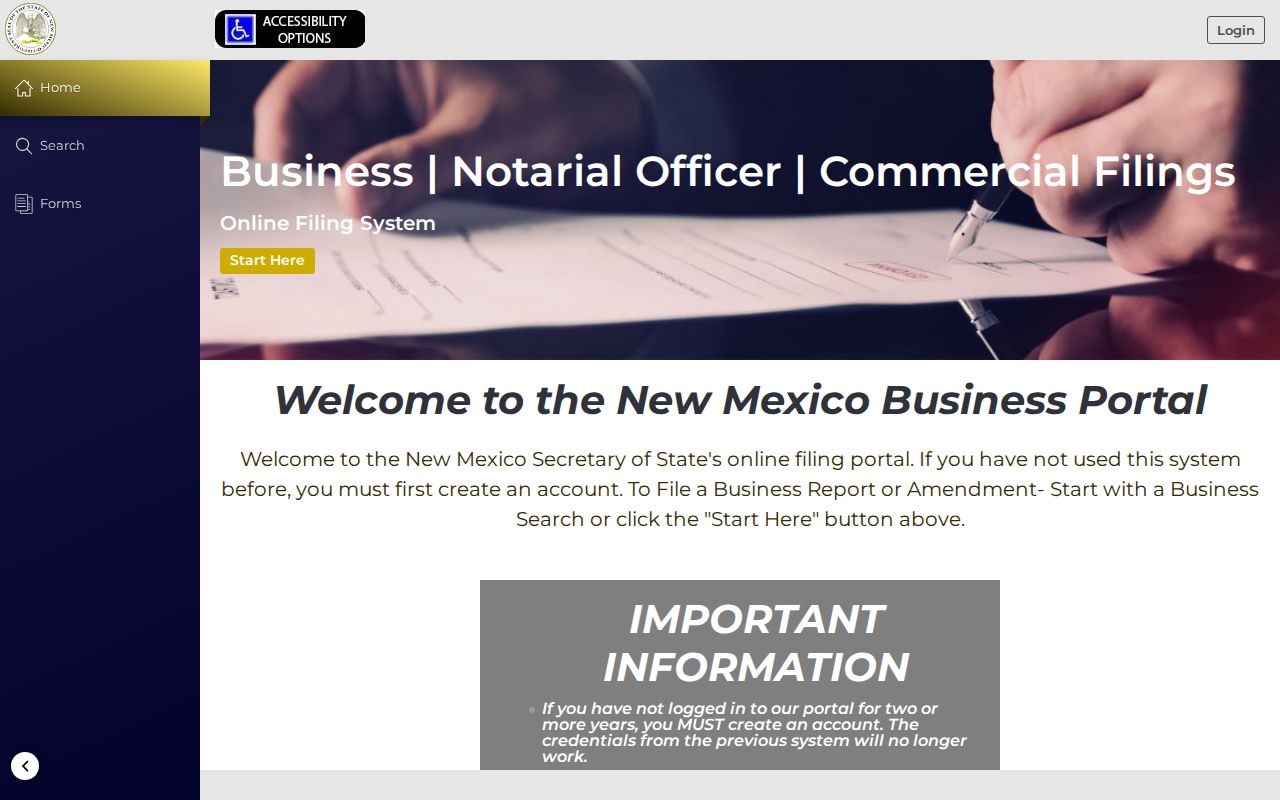
Use the entity number or official document to distinguish a registered agent or office address from a residential address.
For a professional license, first select the right board at the New Mexico Regulation and Licensing Department. Public fields and search tools vary by profession; a board may show a licensee, number, status, and discipline when available. If a summary is not enough, contact that board for its public-record or disciplinary-record route.
New Mexico Resident Privacy and Safe at Home
New Mexico records open some facts and protect others. Day and month of birth and Social Security number stay protected in voter records, and ballot selections remain secret. Courts withhold personal identifiers and limit public access to sealed, juvenile, protected-family, and other restricted matters. Birth certificates have their own eligibility rules. A missing field is a privacy rule or system limit, not evidence that someone has no record.
Safe at Home offers qualifying survivors a substitute mailing address and confidential voter participation. The 2026 application packet says the program forwards first-class mail, needs an authorization number, and may not release a participant's residential address to a third party except by court order. It also says private companies do not have to accept the substitute address. Participation itself is not necessarily confidential, so a search may stop at a protected or substitute address. Do not try to work around that limit through other records.
The Secretary of State's Safe at Home packet explains eligibility, application help, and address handling.
Commercial data brokers may also hold older names or addresses. For a listing, use that company's general privacy or opt-out route, send only the identity match it asks for, save the confirmation, and check later in case the entry returns. The research did not verify a statewide deletion right or universal opt-out system, so no such New Mexico rule should be assumed. Contact the state's consumer-protection office about deceptive practices.
Lawful use. Keep resident research to a lawful personal purpose. Do not use a name or address result to stalk, harass, threaten, or expose a protected person.
Note: An address that stops at a Safe at Home substitute is a privacy boundary; do not try to reverse it through neighbors or unofficial sources.
Correcting a New Mexico Record Match
If two names look alike, compare at least two independent details such as county, address, time, middle name, spouse, school, or business connection. A court name without a matching place or date is weak; a business office is not a home address; an obituary address is historical. Do not merge entries when their dates or locations conflict.
For an error, ask the office that holds that record about its correction process. The assessor handles parcel-owner or value issues; the county treasurer handles tax-account questions; the county clerk can explain deed-index spelling; the county clerk or Secretary of State can handle voter updates; a court clerk can explain correction of a clerical party-name error; and Vital Records handles amendments to certificate facts. A request for access does not itself change an official record.
When an existing public record is hard to find online, New Mexico's Inspection of Public Records Act (IPRA) provides a route to ask the agency's named custodian for an existing record. Give your name, address, telephone number, a precise description, the county and date span, and the preferred format. The custodian should permit inspection as soon as practicable and no later than 15 calendar days; if the record is not available within three business days, the agency must give a written status explanation. Copy charges may apply, generally up to $1 per page for documents 11 by 17 inches or smaller. IPRA does not require an agency to create a new list or answer a research question that is not already recorded. Read the Secretary of State's IPRA request information before sending a request.
For street-wide property work after one person's identity is settled, the New Mexico street directory follows the address and parcel records by street.